BY SWATI MALHOTRA AND ROB VOS
In recent decades, economic growth in Africa south of the Sahara has proven to be a double-edged sword. Higher incomes have helped increase food consumption and reduced rates of undernutrition, though the gains from growth have been unequal; about 20% of Africans, or more than 250 million people, still go to bed hungry every day. At the same time, the prevalence of overweight and obesity is on the rise, in part because a significant share of increased food demand has gone into processed and ultra-processed foods and sugar-sweetened beverages. As a result, the region faces a massive problem of a double burden of malnutrition.
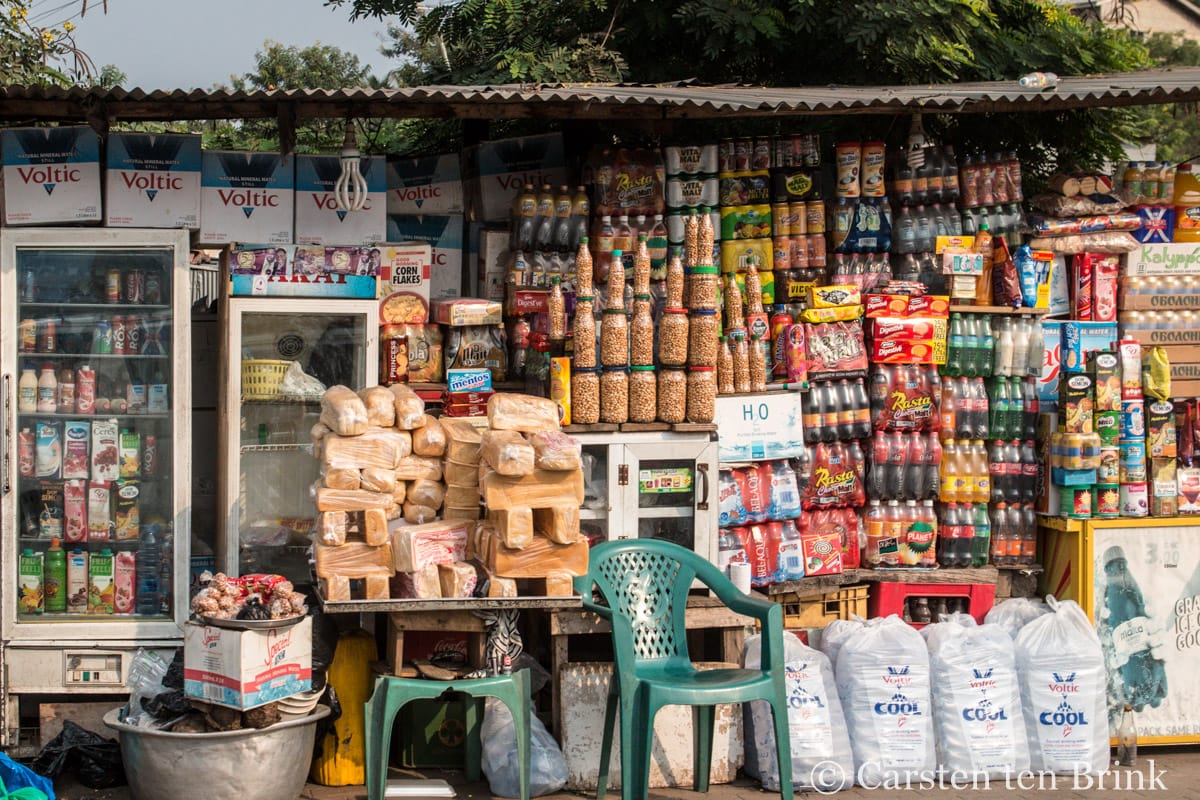
A recent study led by Thomas Reardon and Barry Popkin, and involving IFPRI researchers Bart Minten and Rob Vos and others, associates the emergence of the double burden with rapid changes in African food markets. With rapid urbanization, higher incomes, and employment opportunities for women, demand for convenient (processed) foods is expanding rapidly and supply chains have transformed—shifting production towards cheap processed foods and distribution through supermarkets and local convenience stores, mostly in urban areas.
Photo credit: Carsten ten Brink